Wednesday, August 20, 2014

Her Name Was Rose ... She Taught Me A Lot

On the first day of class our professor introduced himself and challenged us to get to know someone in the room we didn't already know. I stood up to look around when a gentle hand touched my side. I turned around to find a wrinkled old lady beaming up at me with a smile that lit up her entire being. 


She said, "Hi handsome. My name is Rose. I'm eighty-seven years old. Can I give you a hug?"

I laughed and enthusiastically responded, "Of course you may!" and she gave me a giant squeeze. 

"Why are you in college at such a young, innocent age?" I asked.

She jokingly replied, "I'm here to meet a rich husband, get married, and have a couple of kids..." 

"No seriously," I asked. "I am curious to know what motivated you to be taking on this challenge at your age."

"Well I always dreamed of having a college education and now I am going to get one!" she told me.

After class we walked to the student union building and shared a chocolate milkshake. We became instant friends. Every day for the next three months she and I would leave class together and talk nonstop. I was always mesmerized listening to this 'time machine' share her wisdom and experiences with me.

Over the course of that semester, Rose became a campus icon as she easily made friends wherever she went. She loved to dress up and she reveled in the attention bestowed upon her from the other students when she was living it up.

At the end of the semester I invited Rose to speak at our football banquet. I'll never forget the powerful message she taught us. After she was introduced she stepped up to the podium and suddenly dropped all her neatly arranged three by five cards on the floor.

Frustrated and a little embarrassed she leaned into the microphone and simply said, "I'm sorry; I'm just jittery - I gave up beer for Lent and this whiskey is killing me! I'll never be able to get my speech back in order so let me just tell you what I think you should know."
As we all laughed she cleared her throat and began -

"We do not stop playing because we are old; we grow old because we stop playing.
 
There are only two secrets to staying young, being happy and achieving success.
 
1) You have to laugh and find humor every day.
 
2) You've got to have a dream. When you lose your dreams, you die. There are so many people walking around this world who are dead and don't even know it!

There is a huge difference between growing older and growing up. For example, if you are nineteen years old and lie in bed for one full year and don't do one productive thing, you will turn twenty years old. If I, at eighty-seven years old,  stay in bed for a year and never do anything I will turn eighty-eight.

Anybody can grow older - that doesn't take talent or ability. The idea is to grow up by always finding new opportunities in the changes that confront us and to have no regrets.

Most elderly people I know don't have regrets for the things they did; they only have regrets for things they did not do. The only people who fear death are those who have regrets.' 


She then concluded her speech by courageously singing "The Rose." 

She challenged each of us in that banquet hall to study the lyrics of that song and live them out in our daily lives. At the year's end Rose finished all her requirements for a college degree and
graduated with her class. She finally received her college diploma. 

Unfortunately, one week after graduation, Rose died peacefully in her sleep. Over two thousand college students, faculty members and friends attended her funeral to pay tribute to a wonderful woman who taught by example and showed us it's never too late to be all you can possibly be. 

I learned three powerful things from Rose:

1) Growing older is mandatory - growing up is optional.

2) We make our living by what we get - we make our life by what we give.

3)The only thing God promises us is a safe landing; he never promised a calm voyage. 

Please share with your friends.  Gabe

Wednesday, August 13, 2014

You Could Have Heard A Pin Drop


Robert Whiting, an elderly American gentleman 83 years old and a retired High School History teacher arrived in Paris by plane with a tour group.  At French Customs, he took several minutes to locate his passport in one of his coat pockets.

"You have been to France before, monsieur?" a French customs officer asked sarcastically.

Mr. Whiting admitted that he had been to France previously.
"Then you should know enough to have your passport ready."

Mr. Whiting replied  "The last time I was here, I didn't have to show it."

"Impossible,  French law requires all Americans to have to show their passports on arrival in France!" said the French customs official.

Mr Whiting gave the French Official a long hard look, then, quietly explained, ''Well, when I came ashore in 1944 it was at Omaha Beach on D-Day to help liberate your country.  At that time none of us could not find a single Frenchman to show a passport to."
You could have heard a pin drop.


What a few more "You Could Have Heard a Pin Drop Stories? 

These are all very good short stories that every American government official - Federal, State and Local - should know and remember.  The next time you are criticized for the way you voted - never, ever apologize.

Sit back relax and learn ...


Dean Rusk - President Kennedy's Secretary of State - was in France in the early 60's when President Charles DeGaulle made the decision to pull France out of NATO.  President {Former General} DeGaulle said to Mr. Rusk he wanted all US military out of France as soon as possible.

Mr. Rusk looked him straight in the eyes and responded,  "Does that include those who are buried here as well?"

DeGaulle never responded to Dean Rusk.

You could have heard a pin drop.

While in England, attending a large conference, Colin Powell, as the Secretary, was asked by the Archbishop of Canterbury if our plans {the American Plans} for Iraq were just another example of  'empire building' by George Bush.

Mr. Powell turned to the Arch Bishop and said,  "Over the years, the United States has sent many of  its finest young men and women into great peril to fight for others freedom beyond our borders.  The only amount of land the United States has ever asked for in return was enough to bury those that could not return."

You could have heard a pin drop.

At another European conference held in France a number of international engineers were in attendance. During one of the morning breaks, a French engineer came running back into the room saying,  "Have you heard the latest dumb stunt the American's are doing?  They are sending an aircraft carrier to Indonesia because of the tsunami.  What do they intend to do, bomb Indonesia?"

A Boeing Aircraft Corporation engineer who was in attendance spoke up and said:  "Every American aircraft carrier has three fully functioning hospitals on board that can treat several hundred people a day;  they are all nuclear powered and can supply unlimited emergency electrical power to critical facilities on shore; they each have three cafeterias with the capacity to feed 4,000 people three meals a day, they can produce 72,000 thousand gallons of fresh water from sea water each day, and they carry half a dozen helicopters which can be used to transport the injured and any victims to and from their flight deck. 

We Sir, have eleven such ships; said the Boeing Engineer,  how many does France have?"

You could have heard a pin drop.

A few years later a U.S. Navy Admiral attended a naval conference that included Admirals from the U.S., England, Canada, Australia and France. During an evening cocktail reception, the American Admiral found himself standing with a large group of officers. Everyone was chatting away in English as they sipped their drinks.

One of the French Admirals suddenly complained that, whereas Europeans learn many languages, Americans are content to only learn English.  He then asked,  "Why is it that we always have to speak English in these conferences rather than French?"

Without hesitating, the American Admiral replied, "Maybe it's because the Brit's, Canadians, Aussie's and Americans arranged it so you and your fellow countrymen wouldn't have to learn to speak German."

You could have heard a pin drop.

Friday, August 8, 2014

The Day Mrs. Thompson Quit Teaching

Mrs. Thompson stood in front of her fifth grade class on the first day of school and told a lie - a big lie.  As she welcomed all her new students she said she would treat them all the same.  But that was not true; because there was one student Mrs Thompson would not treat the same – his name was Teddy Stoddard.

Now the school district had hired Ms. Thompson the year before and she couldn't help but notice Teddy last year.  He was a known problem child.  He had a lousy academic record and did not play well with the other children.  His clothes were always a mess and he looked like he needed a bath and oh what a bad attitude he had.


Consequently, during the beginning of the school year Mrs. Thompson delighted in marking Teddy’s papers with a broad red marker and placing big bold 'X's on all his wrong answers.  She loved putting a large 'F' at the top of his papers so other students could easily see the grade she gave him when she handed out the papers.

The School had a policy that required each teacher review the records of their students during the first week of December.  Mrs. Thompson held off Teddy's file to the last.  When she finally sat down to review his file, she was taken aback.  Teddy’s first grade teacher wrote, "Teddy is a bright child who does neat work and has excellent classroom manners. He is a joy to have in my class - I will miss him next year."

His second grade teacher wrote, "Teddy is an above average student who is well liked by his classmates. He has been having trouble lately because of his mother’s illness, and life at home has really been a struggle for him." 


His third grade teacher wrote, "His mother's recent death has been very hard on Teddy.  He tries hard to do his best, but his father doesn't show much interest in Teddy and his home life is definitely having a negative impact on him."

Teddy's fourth grade teacher wrote, "Teddy is a withdrawn child who does not show much interest in school. He has few friends, often comes to class unprepared, and is frequently disruptive."

Mrs. Thompson was now ashamed of her behavior. She felt even worse a few weeks later when her students brought in their Christmas presents for her.  All were wrapped in holiday paper and tied with ribbons except for one - Teddy's.  It was clumsily wrapped in brown paper from an old grocery bag with no ribbon. 


Mrs. Thompson opened Teddy’s present first. Some children laughed when they saw an old rhinestone bracelet with several stones missing and an old bottle of perfume only 1/4 full; but Mrs. Thompson quickly stifled their laughter by commenting on how beautiful the bracelet was as she put in on.  She then dabbed some perfume on each wrist, inhaled deeply and said it smells wonderful. Thank you Teddy for such wonderful gifts.

Before he left class that afternoon, Teddy walked up to Mrs. Thompson's desk, slowly leaned in and said, "I just want you to know you smell just like my Mom use to."  He then ran out of the room.  When all the other students left, Mrs. Thompson put her head down and cried at her desk. This was the day she vowed to quit teaching. 


Never again would Mrs Thompson teach reading, writing or arithmetic, instead she would start teaching children to enjoy life.
She began by paying attention to Teddy. As she worked with him, his mind became alive. The more she encouraged him, the faster he responded.  By the end of the school year, Teddy was one of the brightest students in her class.  Despite "her lie to treat all students the same," it was obvious Teddy was her pet.  The following year, Teddy transferred to middle school and Mrs. Thompson never saw him again.

Towards the end of the next school year, Mrs. Thompson found a note under her door.  It was a note from Teddy that said - she was still the best teacher he ever had in his whole life.

  
Seven years passed before she received another note.  This time Teddy wrote to tell her he had just finished high school - third in his class - and that he was planning to go to college - and the way Mrs. Thompson, you are still the best teacher I ever had in my whole life.
Four more years went by when a another letter from Teddy arrived.  This one explained he had graduated from college and was now planning on going to medical school in the fall and, by the way Mrs. Thompson  you are still the best teacher I ever had.

Several years passed before another letter arrived.  In this letter, Teddy stated he had met a wonderful woman and they would be getting married in June.  He explained his father died a few years earlier and he was wondering if she, Mrs. Thompson, would agree to sit in the place of honor reserved for the groom's parents at the head table. This letter was signed Theodore J. Stoddard, M.D.

Of course Mrs. Thomson agreed. When she arrived at the plush wedding ceremony she was wearing an old rhinestone bracelet with several rhinestones missing and carried a scent of a perfume that once reminded Teddy of his mother.  Dr. Stoddard immediately came forward and gave her a big hug. As he inhaled the fragrance of her perfume, he whispered in her ear, "Thank you Mrs. Thompson for making me feel so important and thank you for making such a difference in my life."


With tears running down her cheeks, Mrs. Thompson, whispered back, "No Teddy you have it wrong.  I need to thank you for what you taught me. You taught me I actually could make a difference."

Tuesday, July 1, 2014

How heavy is a glass of water?

Most people would agree the weight of a glass of water doesn't really matter ... what does matter is how long one has to hold a glass of water. 


If one has to hold a glass of water for 30 seconds, its weight would not be a problem; however, if one has to hold a glass of water for an hour, the arm would begin to ache. And finally, if one had to hold a glass of water all day long, that person would probably have to see a doctor the following day.

Since the weight of water in the glass - in the above three examples - remained the same it was actually the length of time one had to hold the glass of water that made the difference.

The same is true for difficult decisions we have to make at work. It's not the level of difficulty that causes us problems - it's the length of time we carry around the thought of ... waiting for the "right time" to make our difficult decisions.

Learn to "make all difficult decisions as soon as you can."  Don't carry around the burden of having to make a difficult decision any longer than you have to.  Make your difficult and tough decisions quickly. 

And don't forget - when you leave a board or council meeting or a public hearing that didn't go as expected, learn to leave your disappointments, dissatisfactions and frustrations at the town hall, village center, city hall, courthouse or school administration building.  You can always pick them up tomorrow when you return to the office.  There's no need to bring them home and burden your family with the weight of the problems you experience on your job. 

Monday, June 16, 2014

The Secret to Professional Success

Over three hundred people made reservations to attend the Chamber of Commerce annual awards meeting. Many brought friends and family members because the keynote speaker scheduled for this event was a wealthy executive who promised to share “The Secret to Professional Success”.   

Even though the luncheon started at noon, by 11:45 a.m. all the chairs and tables in the large banquet room at the Hyatt Hotel were full. As it neared 12:00 p.m., the attendees noticed the featured speaker had not entered the room and was not yet seated at the head table. 

Lunch was promptly served at noon and still there was no speaker at the head table. As the dessert was served many wondered where the speaker could be? Conversations soon began to take place at the various tables. All of a sudden a voice from somewhere in the back of the room yelled out, "Shut up!"

The crowd immediately drew quiet.  Everyone looked around but saw no one so they went back to their desserts and their table conversations.  Soon the same voice shouted,  “SHUT UP!”

Stunned, the entire room became dead silent and everyone sat quietly and sipped on their coffee.  However after a few minutes, again the din of their conversations filled the room.  "SHUT UP," the voice barked again; however this time a diminutive well-dressed man entered the room from a back door and walked slowly to the front of the room and stood behind the podium.


Once behind the podium, he leaned into the microphone and said, “Good afternoon ladies and gentlemen.  I am your speaker.  I understand many of you are here this afternoon to learn the most 'powerful' secret to professional success.

I assure you the secret I will share with you this afternoon will help you tremendously in becoming a great success in your profession whether it be in business or government. 

The secret is simple and every great person understands; however most people find it difficult to employ. For the record, I have already shared this secret with you and I have shared it with you three times.  The secret I am referring to is to Shut Up.

When you Shut Up and let other people talk, you learn.  You hear their problems, you learn their dreams and you understand their concerns. When you Shut Up, you discover ways you can be of value to others and when you Shut Up you can learn ways to help others.  When you Shut Up, you begin to have professional success no matter what endeavor you pursue or what role you play in your organization.

So my advice to all of you if you want to be a success - Shut Up and Listen."

Monday, June 2, 2014

A Flight To Remember

The picture of the C-130A Hercules below was the 126th C-130 aircraft built by Lockheed Aircraft Corporation of Marietta, Georgia. It was accepted into the Air Force inventory on August 23, 1957. 


On November 2, 1972, this aircraft was given to the South Vietnamese Government (Air Force) as part of the US Military Assistance Program.

On April 29, 1975, this C-130 was the last aircraft to fly out of South Vietnam before Saigon fell. As over 100 aircraft laid destroyed on the flight line at Tan Son Nhut Air Base, some of them still burning, this was the last flyable C-130 remaining on the Air Base. In a very panicked state, hundreds of people rushed to get aboard it, as this aircraft represented their only option to freedom.

People hurriedly crowded into this aircraft, packing in it tighter and tighter. Eventually, the load master informed the pilot, Major Phuong, a South Vietnamese instructor pilot, that he could not get the rear ramp doors closed due to the number of people who were standing on it. In a moment of inspiration, Major Phuong began to taxi the aircraft forward, slow at first - then faster.  All of a suddenly he slammed on the brakes. The load master immediately called forward stating he had just successfully closed the rear ramp doors.

In all, 452 people were able to get on board this aircraft, 32 of them had to crowd in the cockpit. US Air Force officials, using a conservative estimate of 100 pounds per person, believe this aircraft was overloaded by at least 10,000 pounds. Consequently, this C-130 had to use every bit of the runway and even the entire overrun before it was able to get lift and go airborne.

It's destination was Bangkok, Thailand, which should have been an easy 1 hour and 20 minute flight, but after an hour and a half, the aircraft was still lumbering over the Gulf of Slam and running low on fuel. A map on the aircraft was located and the crew was able to identify some terrain features and were thus able to navigate by sight and land the plane at Utapao, Air Base, Thailand, after a three and a half hour flight.

Ground personnel on Utapao Air Base were shocked at what "fell out" when they opened the aircraft doors. It was clear to everyone observing that a longer flight would have resulted in significant loss of life for many of the passengers. In the end, however, all 452 evacuees on this plane made it to freedom aboard this historic C-130.

The aircraft was reclaimed by the United States Air Force over the next 14 years and assigned to two different Air National Guard units. 

On June 28, 1989, this aircraft made its final flight. It flew to Arkansas where it sits today placed on permanent display for all to see. 

THE NEXT TIME YOU DRIVE THROUGH ARKANSAS, YOU MAY WANT TO DRIVE PAST THE FRONT GATE OF LITTLE ROCK AFB, (ARKANSAS) AND STOP FOR A MOMENT TO TAKE A LOOK AT THIS HISTORIC AIRCRAFT.


Friday, May 9, 2014

What’s the Difference between Rich and Poor?


One day, the father of a very wealthy family decided to teach his son a valuable lesson about life. His plan was to take his son on a weekend trip to visit an old friend who lived with his family out in the country. The father wanted his son to see firsthand how poor people actually live in America. 


On their ride home on Sunday evening the father looked over at his son and asked, “Well son, how was the trip? Did you learn anything this weekend?” 

“The trip was great Dad.  I loved it and all the people we met were so nice,” replied the son. 

“Well did you see how those people in the country live?” asked the father?

“Oh yes,” said the son.


“So tell me, what did you learn from the trip?” the father asked. 

The son replied, “I saw that we have one dog and they have four. I saw that we have a swimming pool that reaches to the middle of our backyard and they have a creek that has no end. When we sit on our patio at night we look at the light flickering from those imported brass lanterns Mom bought, but when they sit on their porch at night they look up at the stars and study them.

We live on a small lot of land, but they have fields that go beyond sight. When we look out across our lawn we see green grass and other houses; when they look out their windows they can see the whole horizon. We have servants who serve us, but they enjoy serving each other. We buy our food at the grocery store, but they grow their own.  You built a large metal fence around out property to protect us, but they have all kind of friends who protect them
.” 


The boy’s father was speechless.

Then adding insult to his father’s injury the son added, “Thanks Dad so much for showing me how poor we really are.  I really learned a lot today."  

Tuesday, April 22, 2014

Why Johnny Can't Read - You Won't Believe Why


In the early 1950's an Austrian educational specialist published a study in America called "Why Johnny Can't Read."  His study argued that the Dick and Jane primers used at that time throughout American schools to teach children to read weren't working.


He believed they were horrible educational tools; according to him they were stupid, pointless, tasteless little readers.  He doubted whether any middle-class, middle-income, middle-IQ student could learn anything by reading  "Look, look" or "Yes, yes" or "Come see Spot" or "See the funny, funny animal."

He believed the stories in these primers were boring and the books ineffective at best in helping American children learn how to read. 

William Spaulding, a publisher from Houghton Mifflin's Publishing Company who worked in the educational division and read this Austrian study, thought it might be right. He met a man a few years earlier who he'd published a few not-very-well-known but very imaginative children's books that his children really loved to read over and over.

Mr. Spaulding thought this unknown writer of children's books might be able to write a book that would really be good for teaching American children how to read, want to read, and read over and over again. So he invited the author over for dinner one night and explained the dilemma to him.  Then Mr. Spaulding asked, "Can you write a book with a simple story that first-graders won't be able to put down and will just want to read over and over again?"

Stunned by the question and not sure how to respond, the writer asked if he could have some time to think about it and work on it.  He left that dinner and spent the next nine months composing a book he thought would meet the goals of Mr. Spaulding. 


 A meticulous editor and reviser, he believed that a children's book must be kept simple.  Every chapter had to be boiled down to just one simple paragraph so a child would be able to understand it.  He worked especially hard on the word count as he wanted to use as few words as possible.

The small children's reader this writer finally produced at Mr. Spaulding's request is now considered to be the most popular children's book ever written in American history. Within less then a year of its initial publication, it was selling 12,000 copies a month and within five years from its release it had sold over a million copies.  This was an incredible feat for a children's book.  

His book contained a grand total of 1,702 words but the kick is he only used 220 different words in the entire book. His simple yet effective book revolutionized the way children in America learn to read.  The book he wrote and presented to Mr. Spaulding nine months later was The Cat in the Hat.


Dr. Seuss (aka Theodor Seuss Geisel) is without a doubt the best-selling children's book author of all time.  He has since written 63 other children's books in all, including Horton Hears a Who! (1954), One Fish, Two Fish, Red Fish, Blue Fish (1960), Green Eggs and Ham (1960), Hop on Pop (1963), Oh, the Thinks You Can Think! (1975), The Butter Battle Book (1984), and of course, The Cat in the Hat (1957).

Tuesday, April 8, 2014

The Large Wooden Bowl - If you have children please don't read


After Grandmother passed away it was obvious Grandfather  was not able to live on his own. His eyesight was failing and he often faltered when he walked. His memory was fading and worst of all he had developed a noticeable and  uncontrollable trembling in his hands. 

Rather then have him placed in a nursing home, his only son and daughter-in-law invited Dad to move in with them and their seven-year-old son. Grandfather was grateful and gladly accepted their generous offer.

Since the son's wife insisted on always having the evening meal at the big table in the dining room, Grandfather was assigned his place at the table.  Unfortunately Grandfather's failing vision and trembling hands made eating his meals difficult.  Every night peas, corn, carrots, soup and small pieces meat would often roll off his fork or spoon and land on the floor and the elegant carpet. In addition, his uncontrollable shaking hands would often loose their grip which resulted with him dropping his glass which would always make a mess on the fine linen tablecloth.

Both the son and daughter-in-law became irritated with the nightly mess and realized something had to be done.  They did not want to subject their son to Grandpa's behavior. They eventually decided the only thing to do was to have Grandfather eat alone in the kitchen where it would be easier to clean up his mess from the linoleum floor.


As soon as Grandfather was moved into the kitchen, a new problem developed.  Every time Grandfather accidentally dropped a glass or dish on the kitchen floor it broke. Luckily while visiting a local garage sale the son and his wife found a simple, large wooden bowl which they thought would be perfect for Grandfather.

Now each night the daughter-in-law would fill Grandfather's wooden bowl with the evening meal then set it on the kitchen table. Every one now seemed happy; the family ate a nice meal in the dining room while Grandfather ate his meal in the kitchen.  No one had to worrying about cleaning up any mess and the little son was not subjected to watching Grandpa's antics.
 
A few days later Dad arrived home early from work and greeted his wife in the kitchen.  "Where's Dad?" he asked.

"He's taking a nap," the wife replied. Since it was such a gorgeous day, the husband suggested the two of them share a cocktail on the deck. While standing on their deck, they noticed their son feverishly working on something over by the corner of the garage. Curious as to what he was doing, they walked over to their son.

"What are you working on, Son?" the father asked. 


The son looked up and innocently and replied, "Oh, I am making you and Mom a special present". 

"A special present?" they asked.

"Yes Sir," replied the boy. 

"Well what is it?" Mom asked. 

"It's a set of large wooden bowls just for you and Dad so, when you grow old, you will be able to eat your food in the kitchen and not make a mess in the dining room for my wife and I to clean up every night after dinner," the son replied. He then went back to his woodworking project.

Their son's words cut through them like a knife; neither the husband or his wife knew what to say. They turned and slowly walked back to the deck.  When they arrived back at the deck, they set their drinks down and just sat quietly.

That evening Mom, after spreading out her fine linen tablecloth, laid down two large pieces of plastic - one she placed on the table by Grandfather's place and the other on the floor under Grandfather's chair.  When dinner was ready, Dad walked to his father's room and took his father by the hand and led him into the dining room.  He pulled out a chair and said, "Father, please sit here." 

From that night forward, Grandfather never again had to sit alone in the kitchen eating from a large wooden bowl. For the remainder of his days he ate with his family in the formal dining room. Neither his son or his daughter-in-law ever seemed to mind cleaning up the mess Grandpa made each night while eating his supper.  

Friday, March 21, 2014

Betty Crocker - Interesting Facts - Great Fiction


Betty Crocker is a household name known around the world today. For almost a century, Betty has created delicious recipes and proven baking methods that even most novice cooks and young newlyweds can follow to bake scrumptious desserts and a variety of baked goods. Betty’s advice in the kitchen is trusted by all and followed by many. However here are a few things you may not be aware of regarding Ms. Crocker.

In 1880, the forerunner of the General Mills Company entered its newly milled flour in the International Miller’s Competition and surprisingly it won a ‘Gold Medal’. So proud to have won this gold medal, the company changed the name of its flagship flour to “Gold Medal Flour.” Even though the original company changed hands several times, the name Gold Medal Flour has always remained; it’s the largest selling flour in the U.S. 

Back in 1921, one of the predecessors to today’s General Mills decided to run a special promotion regarding its Gold Medal Flour. The company invited housewives to submit questions they had about Gold Medal Flour and assured everyone who did that they would receive a handwritten response from the company. The company was soon overwhelmed with letters coming in from across America. To ensure continuity in responding to all the people sending in questions, the company invented the name Betty Crocker – it just sounded like a good name. All the responses to questions the company received regarding Gold Medal Flour were sent out signed Betty Crocker. 


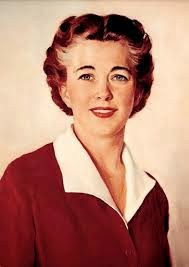
Betty Crocker, a fictional character, became so popular with housewives and bakers around the world and they demanded to know what she looked like. So back in 1936, General Mills commissioned an artist to create a likeness of what he thought Betty Crocker would look like - thus the Betty Crocker image we know today was born.

Over the years General Mills has updated Betty’s look seven times. Each update provided her with a contemporary hair style and a modern, fashionable wardrobe. The last makeover Betty received was in 1996. While Betty initially was portrayed as a matronly mother, today she looks younger, resourceful and confident. In addition, she is committed to her family, her community and she loves to bake.


What’s interesting is that most people do not realize that there is always a "Betty Crocker" on duty 24/7 at the General Mills Company headquarters in Golden Valley, Minnesota, to answer any questions that arise regarding Gold Medal Flour.

What’s even more amazing is that according to AdWeek, Betty Crocker reigned as the “Most Famous Fictional Female in the U.S." for almost a century until she was recently bumped to second place by a young upstart. According to AdWeek, the four most famous fictional females in America today are: 

1) Flo – The insurance spokeswoman from Progressive Insurance

2) Betty Crocker – The wise baker and kitchen c
onsultant from General Mills

3) Mrs. (Joy) Butterworth – The syrup icon from 
Pinnacle Foods, and 

4) Catalina – The beautiful, fun-loving mermaid from
 Chicken of the Sea